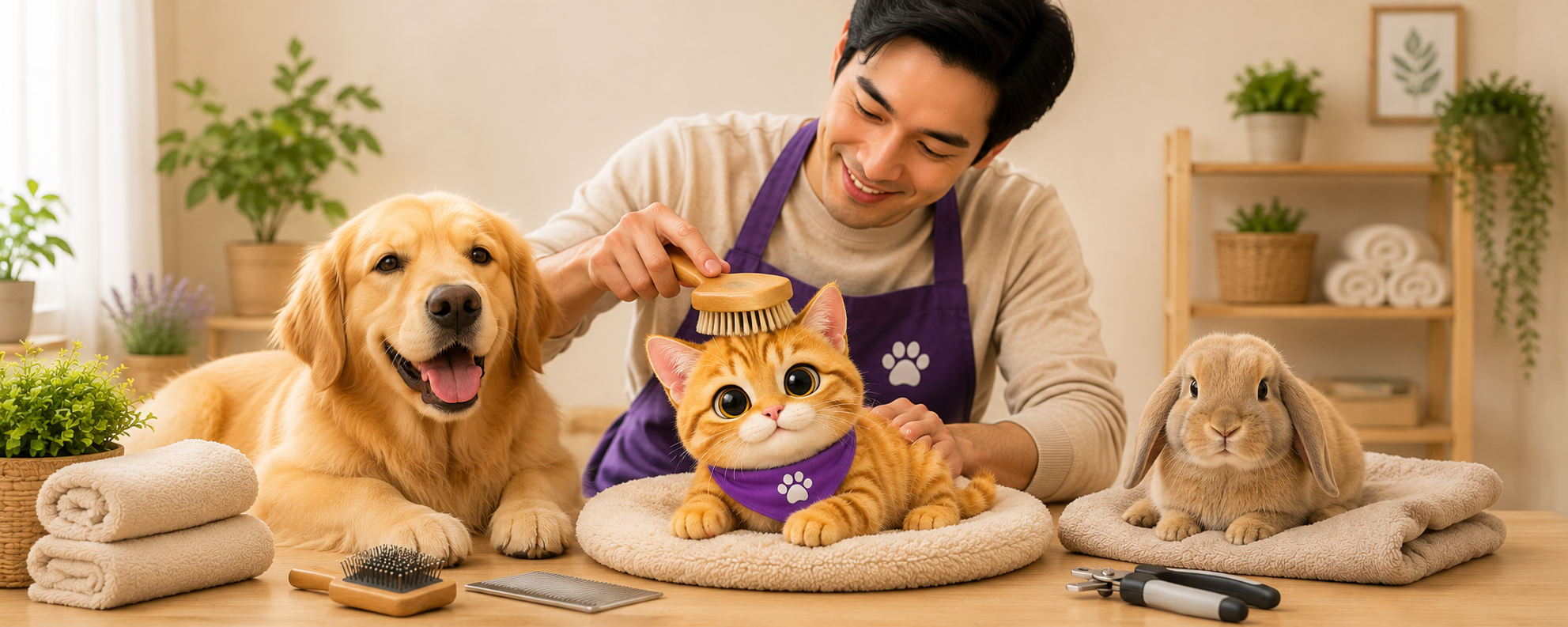
1. Brush Your Pet Regularly
Brushing is one of the easiest ways to care for your pet’s coat. It helps remove loose fur, dirt, and tangles before they become a bigger problem. For pets with long fur, brushing more often can help prevent knots and matting. For short-haired pets, brushing still helps reduce shedding and keeps their coat smooth and clean. Regular brushing also improves bonding time between you and your pet. Start slowly, use gentle movements, and reward your pet with praise so they feel comfortable.
2. Keep Their Fur Clean and Fresh
A clean coat helps your pet feel more comfortable. Dirt, dust, and unpleasant smells can build up on their fur, especially if they play outside or spend time in areas that are not cleaned regularly. Some pets may need baths, while others may only need gentle wiping or brushing. Always choose products that are safe for pets and suitable for their skin. Avoid using harsh human shampoo, as it may irritate your pet’s skin. If your pet has sensitive skin, ask a veterinarian for the best grooming option.
3. Clean Their Paws After Outdoor Activities
Your pet’s paws touch many surfaces every day. Dust, mud, bacteria, and small particles can stick to their paws after walks or outdoor play. Cleaning their paws helps keep them comfortable and also prevents dirt from spreading around your home. Use a soft cloth or pet-safe wipes to gently clean between the paw pads. This simple habit can make a big difference, especially for pets that love exploring outside.
4. Check Their Ears
Pet ears can collect dirt and moisture, especially for pets with folded ears or long fur around the ears. Dirty ears may cause discomfort and sometimes lead to irritation. Check your pet’s ears regularly. If you notice bad smell, redness, swelling, or your pet scratching their ears often, it may be a sign that they need extra care. When cleaning ears, be gentle. Do not push anything deep inside the ear canal. If you are unsure, it is safer to get advice from a veterinarian or professional groomer.
5. Trim Their Nails When Needed
Long nails can make walking uncomfortable for your pet. They may also get caught on fabric, carpets, or bedding. Check your pet’s nails regularly and trim them when they become too long. If you are not confident doing it yourself, you can ask a groomer or veterinarian for help. For pets that feel nervous, trim slowly and calmly. You do not have to cut all nails at once. The goal is to make the experience safe and stress-free.
6. Keep Their Sleeping Area Clean
Grooming is not only about your pet’s body. Their environment matters too. Your pet’s bed, blanket, cage, or favourite resting area can collect fur, dust, and unpleasant smells over time. Cleaning these areas regularly helps your pet stay fresh and comfortable. A clean sleeping area also supports better rest and helps reduce the chance of skin irritation or discomfort.
7. Use Pet-Safe Cleaning Products
Pets are sensitive to strong chemicals and harsh scents. That is why it is important to use products that are safe around pets. KienkoPet helps pet owners maintain a cleaner and fresher environment for their furry friends. With a pet-safe, odor-eliminating formula, it helps reduce unpleasant smells and keeps your pet’s space more comfortable. A fresh and clean environment can support your pet’s overall wellbeing and help them feel happier at home.
8. Watch for Changes During Grooming
Grooming time is a great opportunity to check your pet’s body. While brushing or cleaning, pay attention to any changes such as: • Red or irritated skin • Unusual lumps or bumps • Hair loss • Fleas or ticks • Dry or flaky skin • Wounds or scratches • Strong or unusual smell If you notice anything unusual, monitor your pet closely and consult a veterinarian if needed.
9. Make Grooming a Positive Routine
Some pets may feel nervous during grooming, especially if they are not used to it. The best way is to start slowly and make the experience positive. Use a calm voice, gentle touch, and short grooming sessions. Give your pet praise or a small reward after grooming so they associate it with something good. Over time, grooming can become a normal and enjoyable routine.
10. Groom According to Your Pet’s Needs
Every pet is different. A long-haired cat may need more brushing than a short-haired dog. A rabbit may need gentle coat care, while an active dog may need more paw cleaning after outdoor walks. Pay attention to your pet’s lifestyle, coat type, age, and comfort level. The best grooming routine is one that suits your pet’s individual needs.
Conclusion
Grooming is a simple but powerful way to care for your pet. It helps keep them clean, comfortable, healthy, and happy. By brushing their fur, cleaning their paws, checking their ears, trimming their nails, and keeping their living space fresh, you are giving your pet the care they deserve. A well-groomed pet is not only cleaner, but also more comfortable and confident. With regular grooming and a pet-safe environment, your furry friend can enjoy a healthier and happier life every day.